Building powerful, resilient legs is the cornerstone of functional human movement, athletic performance, and long-term metabolic health. The lower body contains the largest muscle groups in the human anatomy. When trained properly, these muscles produce explosive force, protect vulnerable joints from injury, optimize hormonal balance, and support independent mobility throughout every stage of life.
Despite the obvious importance of lower-body development, many lifters and fitness enthusiasts struggle to make meaningful progress. Some fall into the trap of overcomplicated workout routines, while others rely on superficial machine circuits that fail to generate enough mechanical tension. Developing genuine lower-body strength does not require obscure equipment or extreme training splits. It demands an understanding of foundational biomechanics, progressive overload, movement variety, and strategic recovery.
The Functional Anatomy of Lower-Body Power
To build an effective leg training protocol, you must first understand the primary muscle groups responsible for moving and stabilizing the lower kinetic chain.
The lower body is driven by several major muscle compartments:
-
The Quadriceps: Situated on the front of the thigh, this four-muscle group extends the knee joint and assists in hip flexion. Developing the quadriceps creates knee stability and decelerates the body when walking downhill or landing from a jump.
-
The Hamstrings: Running along the back of the thigh, the hamstrings flex the knee and work alongside the glutes to extend the hips. Strong hamstrings protect the anterior cruciate ligament from tearing during high-velocity directional changes.
-
The Gluteal Complex: Comprising the gluteus maximus, medius, and minimus, these muscles generate hip extension, abduction, and internal and external rotation. They serve as the primary engine for sprinting, climbing, and lifting heavy loads from the ground.
-
The Calves and Ankle Stabilizers: The gastrocnemius, soleus, and tibialis anterior control ankle plantarflexion and dorsiflexion, transferring ground reaction forces upward through the kinetic chain.
-
The Adductors and Abductors: Located on the inner and outer thighs, these muscle groups stabilize the pelvis, prevent knee valgus (inward collapsing), and guide lateral movements.
Training these muscle groups in balance prevents muscular asymmetries, reduces lower-back strain, and ensures smooth joint mechanics.
The Core Movement Patterns for Leg Strength
Rather than categorizing leg workouts by isolated body parts, the most practical approach groups exercises by fundamental movement patterns. A complete leg routine must cover four primary lower-body actions: the knee-dominant squat, the hip-dominant hinge, the unilateral lunge, and targeted lower-leg articulation.
The Knee-Dominant Squat Pattern
The squat is the definitive test of lower-body power. It loads the quadriceps, glutes, and adductors through a deep range of motion while requiring tremendous core bracing and spinal stability.
Effective variations include:
-
Barbell Back Squats: The gold standard for total-body systemic loading. High-bar squats place greater emphasis on the quadriceps, while low-bar squats recruit more of the posterior chain.
-
Front Squats: By placing the barbell across the anterior deltoids, front squats enforce an upright torso position, increasing quadriceps activation and minimizing shear stress on the lumbar spine.
-
Goblet Squats: Holding a single dumbbell or kettlebell against the chest provides an accessible way to learn proper squat mechanics, reinforce hip mobility, and build foundational strength.
-
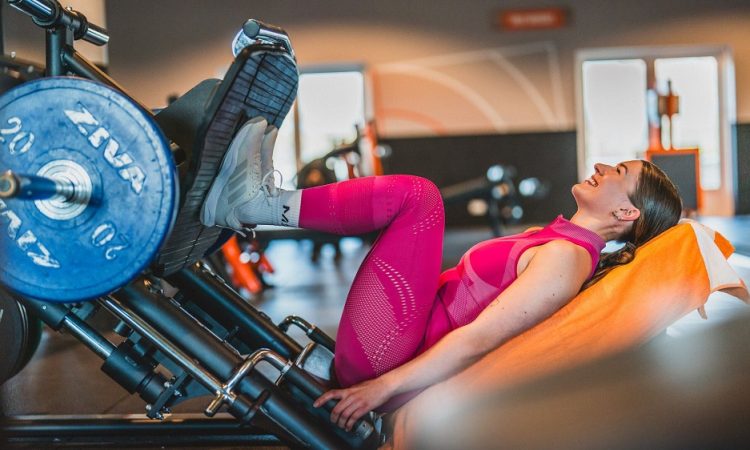
Leg Press: While machines lack the stabilizer demands of free weights, the leg press allows you to load the quadriceps and glutes safely near muscular failure without systemic spinal fatigue.
The Hip-Dominant Hinge Pattern
The hip hinge focuses on pushing the hips backward while maintaining a neutral spine, placing maximum mechanical tension on the hamstrings, glutes, and lower back erectors.
Key hinge movements include:
-
Conventional and Sumo Deadlifts: These lifts build raw pulling power from the floor, challenging the entire posterior chain to generate force while preserving spinal integrity.
-
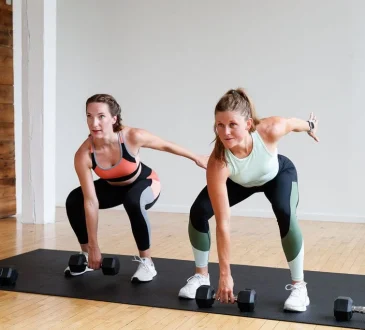
Romanian Deadlifts: Initiated from a standing position, Romanian deadlifts emphasize the eccentric lengthening of the hamstrings under load, driving muscle hypertrophy and tendon resilience.
-
Barbell Hip Thrusts: By eliminating balance constraints and loading the hips horizontally, hip thrusts isolate the gluteus maximus at peak contraction, maximizing glute growth and sprint acceleration.
Unilateral Training: Fixing Imbalances and Joint Stability
Bilateral exercises (squats and deadlifts) are unmatched for moving heavy absolute loads, but they can allow the dominant side of the body to compensate for a weaker side. Unilateral exercises train one leg at a time, exposing asymmetries, challenging pelvic stabilizers, and building functional balance.
Crucial unilateral exercises include:
-
Bulgarian Split Squats: Elevating the rear foot onto a bench shifts the entire workload onto the front leg, demanding intense quadriceps and glute drive while stretching the rear hip flexor.
-
Walking Lunges: Lunging across a room challenges dynamic balance, decelerating body weight with each step and firing the gluteus medius to keep the pelvis level.
-
Single-Leg Romanian Deadlifts: Balancing on one foot while hinging strengthens the ankle stabilizers, activates the deep glute rotators, and builds durable hamstring control.
-
Step-Ups: Driving through the heel onto a sturdy plyometric box teaches the hips to generate vertical power without relying on momentum.
Lower-Leg Conditioning
Neglecting the lower legs leads to weak ankles and recurring foot conditions like plantar fasciitis. An effective program trains both components of the calf musculature:
-
Standing Calf Raises: With the knees straight, standing calf raises place direct tension on the fast-twitch gastrocnemius muscle.
-
Seated Calf Raises: Bending the knees to ninety degrees deactivates the gastrocnemius and shifts the mechanical load entirely onto the endurance-oriented soleus muscle.
-
Tibialis Raises: Flexing the toes upward against resistance strengthens the front of the shin, protecting the knee joint by absorbing ground impacts during running and jumping.
Programming Practical Leg Workouts
Achieving consistent gains in lower-body strength requires structured programming that manages volume, intensity, and frequency.
The Power of Progressive Overload
Muscles adapt only when they are subjected to demands greater than what they have previously encountered. Progressive overload does not mean adding heavy weight to the bar every single session. It can be applied through several practical methods:
-
Increasing the external load on an exercise over time while maintaining strict form.
-
Performing more clean repetitions with the same working weight.
-
Adding an extra working set to increase total training volume.
-
Slowing down the eccentric (lowering) tempo to increase time under muscular tension.
-
Reducing rest periods between sets to challenge metabolic recovery capacity.
Structuring Your Weekly Training Split
To maximize muscle protein synthesis and neurological adaptation, each leg muscle group should be trained two times per week rather than blasted in a single, exhausting leg day.
A practical upper-lower or full-body training split might structure leg training as follows:
-
Lower Body Day A (Squat and Quad Focus):
-
Barbell Back Squat: 4 sets of 5 to 6 repetitions
-
Romanian Deadlift: 3 sets of 8 to 10 repetitions
-
Bulgarian Split Squat: 3 sets of 10 to 12 repetitions per leg
-
Standing Calf Raise: 4 sets of 12 to 15 repetitions
-
Hanging Leg Raise (Core): 3 sets to fatigue
-
-
Lower Body Day B (Hinge and Glute Focus):
-
Conventional Deadlift or Trap-Bar Deadlift: 3 sets of 5 repetitions
-
Front Squat or Leg Press: 3 sets of 8 to 10 repetitions
-
Barbell Hip Thrust: 4 sets of 10 to 12 repetitions
-
Seated Hamstring Curl: 3 sets of 12 to 15 repetitions
-
Seated Calf Raise: 4 sets of 15 to 20 repetitions
-
The Role of Joint Mobility in Leg Development
You cannot build strength in ranges of motion you cannot reach safely. Tight ankles and restricted hips are the most common culprits behind poor squat depth, rounded lower backs during deadlifts, and recurring knee aches.
Incorporate targeted mobility drills before your working sets:
-
Ankle Dorsiflexion Rocks: Place your foot flat near a wall and drive your knee forward over your toes without letting the heel lift off the ground. Improving ankle mobility allows your knees to travel forward naturally during squats, keeping your torso upright.
-
90-90 Hip Rotations: Seated on the floor with both knees bent at ninety-degree angles, rotate your legs from side to side to mobilize internal and external hip rotators.
-
Adductor Rockbacks: Kneeling with one leg extended out to the side, rock your hips backward toward your heels to lengthen tight adductor muscles that restrict deep squat positions.
Nutrition and Recovery for Leg Muscle Growth
The metabolic cost of training large lower-body muscle groups is exceptionally high. Without adequate nutritional support and restorative sleep, your body cannot rebuild damaged muscle tissue or adapt to training loads.
To maximize recovery:
-
Prioritize Dietary Protein: Consume between 0.7 and 1.0 gram of high-quality protein per pound of body weight daily to sustain muscle protein synthesis and tissue repair.
-
Fuel with Complex Carbohydrates: The high-volume demands of heavy leg training rely heavily on intramuscular glycogen. Eat whole grains, potatoes, oats, and fruits around your workout windows to maintain training intensity.
-
Protect Your Sleep: Aim for seven to nine hours of quality sleep nightly. Growth hormone secretion and central nervous system recovery peak during deep slow-wave sleep cycles.
Frequently Asked Questions
Can bodyweight exercises alone build substantial leg strength?
Bodyweight exercises like pistol squats, walking lunges, jump squats, and sissy squats can build excellent baseline muscular endurance, balance, and moderate strength. However, because the legs naturally carry your entire body weight daily, they eventually require progressive external resistance (barbells, dumbbells, kettlebells) to build maximal absolute strength and dense muscular hypertrophy.
How low should a person squat for optimal strength and joint safety?
For individuals with healthy joint mechanics, squatting to parallel (where the crease of the hip aligns with the top of the knee) or slightly below parallel maximizes muscle recruitment across the quadriceps, glutes, and adductors. Squatting below parallel distributes compressive forces evenly across the knee joint rather than concentrating stress at the patellar tendon, provided you can maintain a neutral, non-rounded spine.
Why do hamstrings often fail to grow from squats alone?
During a squat, the hips flex while the knees also flex. Because the hamstrings cross both the hip and knee joints, they experience minimal change in overall muscle length during the movement, acting primarily as joint stabilizers rather than prime movers. To build strong hamstrings, you must include dedicated hip-hinge movements (like Romanian deadlifts) and knee-flexion exercises (like hamstring curls).
Is it safe for knees to travel past the toes during lunges and squats?
Yes. Allowing the knees to travel naturally past the toes is a safe and necessary biomechanical action for deep squats, stair climbing, and athletic deceleration. As long as your heels remain planted firmly on the floor and the movement is controlled, allowing forward knee travel strengthens the patellar tendon and recruits the vastus medialis muscle of the quadriceps.
How can a lifter prevent lower-back pain during heavy deadlifts?
Lower-back pain during deadlifts usually results from losing spinal neutrality or allowing the barbell to drift away from the body. To protect the spine, brace your core using the Valsalva maneuver, engage your latissimus dorsi to pull the barbell tight against your shins, and push the floor away using your legs rather than trying to yank the weight upward with your lower back.
What is the primary difference between training the soleus versus the gastrocnemius calves?
The gastrocnemius is a two-headed muscle that crosses the knee joint and responds best to heavy loads and explosive contractions performed with straight legs, such as standing calf raises. The soleus sits beneath the gastrocnemius, crosses only the ankle joint, contains a higher proportion of slow-twitch endurance fibers, and is trained when the knees are bent, such as during seated calf raises.
How should someone adjust their leg training if they have mild knee osteoarthritis?
Individuals with mild knee osteoarthritis should prioritize low-impact, controlled resistance training to strengthen the surrounding musculature without jarring the joint. Emphasize open-chain and closed-chain exercises with controlled tempos, such as step-ups, terminal knee extensions with bands, and Romanian deadlifts. Warm up thoroughly to circulate synovial fluid, and work strictly within pain-free ranges of motion.