Physical strength is often viewed through the narrow lens of competitive sports, bodybuilding stages, or athletic performance. Society frequently associates lifting weights with heavy barbells, chalk-covered gym floors, and aesthetic pursuits. However, the true value of strength extends far beyond vanity or athletic accolades. At its core, muscular strength is the fundamental currency of daily human function.
Resistance training, often called strength training or weight training, involves exercising muscles against an external force to stimulate tissue adaptation, neuromuscular coordination, and metabolic resilience. Incorporating regular resistance work into your lifestyle is not about building an intimidating physique; it is about building a durable, capable body that effortlessly handles the physical demands of everyday life.
The Difference Between Gym Strength and Everyday Strength
Everyday strength, often termed functional strength, refers to the capacity to perform daily tasks with ease, stability, and absence of pain. Consider the physical activities common in standard routines:
-
Lifting heavy bags of groceries from the trunk of a car
-
Carrying a sleeping child upstairs without straining the lower back
-
Pushing open a heavy commercial door against strong wind
-
Placing a heavy suitcase into an airplane overhead bin
-
Bending down to pull weeds in the garden for an hour without debilitating stiffness
Traditional gym machines often lock the body into fixed, seated paths of motion that isolate single muscle groups. While helpful for basic hypertrophy, this approach does not necessarily prepare the human body for unpredictable, three-dimensional movements. Everyday strength requires multi-joint coordination, core stabilization, and balanced muscle recruitment.
Resistance training bridges this gap by reinforcing primary human movement patterns: pushing, pulling, hinging at the hips, squatting, carrying, and rotating. When you train these patterns against progressive resistance, everyday physical challenges transform from exhausting chores into effortless actions.
Musculoskeletal Adaptations That Protect the Body
The human body operates under a strict principle of biological adaptation: tissues respond directly to the mechanical forces placed upon them. When muscles, bones, and connective tissues are regularly challenged by resistance, they undergo structural enhancements that safeguard the entire skeletal system.
Bone Mineral Density and Osteoporosis Prevention
Bone is dynamic, living tissue that constantly undergoes remodeling, a cycle where old bone tissue is broken down and new bone is laid down. After the third decade of life, bone resorption begins to outpace bone formation, steadily decreasing bone mineral density and setting the stage for osteopenia and osteoporosis.
Resistance training places axial and mechanical loads along the skeletal frame. When muscles contract forcefully against resistance, tendons pull on bone insertion points. This mechanical stress deforms the bone matrix at a microscopic level, signaling osteoblasts (bone-building cells) to lay down new mineral deposits, primarily calcium and phosphate. This process increases bone thickness and structural density, significantly reducing the risk of debilitating fractures during accidental slips or falls.
Joint Stability and Connective Tissue Resilience
Chronic joint pain, particularly in the knees, hips, and shoulders, frequently stems from muscular imbalances and weak connective tissue rather than intrinsic joint defects. When the muscles surrounding a joint are weak, the joint capsule and articular cartilage must absorb excessive mechanical impact during walking, stairs, or lifting.
Progressive resistance training stimulates collagen synthesis within tendons, ligaments, and fascia. Thicker, stiffer tendons transmit force more effectively, while reinforced ligaments keep joint articulations properly aligned under load. Furthermore, strengthening the muscular stabilizers around a joint creates an active shock-absorbing mechanism that relieves direct pressure on sensitive cartilage.
Combating Age-Related Sarcopenia
Beginning around age thirty, adults lose between three and eight percent of their total muscle mass per decade if they remain inactive, a degenerative process known as sarcopenia. This loss accelerates drastically after age sixty, leading to weakness, loss of physical autonomy, metabolic decline, and frailty.
Aerobic activities like walking or cycling are beneficial for heart health, but they lack the mechanical tension necessary to stimulate high-threshold motor units and prevent the atrophy of Type II (fast-twitch) muscle fibers. Resistance training is the only proven intervention that halts and reverses sarcopenia. It stimulates muscle protein synthesis, increases muscle cross-sectional area, and preserves the fast-twitch muscle fibers responsible for rapid balance corrections and forceful contractions.
Neuromuscular Efficiency: How the Brain Learns Strength
A significant portion of the strength gained through resistance training does not come from larger muscles, but from improved neurological communication. The central nervous system acts as the electrical command center, sending action potentials along motor neurons to trigger muscle fiber contractions.
In an untrained individual, the brain struggles to coordinate these signals efficiently. When you start resistance training, the nervous system undergoes several rapid improvements:
-
Motor Unit Recruitment: The brain learns to activate a higher percentage of available muscle fibers simultaneously within a target muscle.
-
Rate Coding: The firing frequency of nerve impulses increases, allowing the muscle to generate force faster and more smoothly.
-
Intermuscular Coordination: Opposing muscle groups (antagonists) learn to relax while the working muscles (agonists) contract, eliminating internal resistance and making movements fluid.
-
Reflex Potentiation: Proprioceptors like the Golgi tendon organs and muscle spindles recalibrate, allowing safe, powerful movements without premature inhibitory signaling.
These neurological adaptations explain why a person can become significantly stronger within just a few weeks of lifting weights, long before noticeable muscle hypertrophy occurs. In daily life, superior neuromuscular efficiency translates to sharper reflexes, better balance on uneven surfaces, and greater agility when navigating unexpected physical obstacles.
Metabolic and Hormonal Vitality
Skeletal muscle is not just a mechanical pulley system for moving bones; it is the largest metabolic organ in the human body. The amount and quality of muscle tissue you carry heavily dictates systemic metabolic health, insulin sensitivity, and hormonal balance.
Glucose Disposal and Insulin Sensitivity
During and following resistance exercise, contracting skeletal muscles take up glucose directly from the bloodstream via insulin-independent pathways. Muscle contractions trigger the translocation of glucose transporter type four (GLUT4) proteins to the muscle cell membrane, shuttling blood sugar into intracellular glycogen stores without requiring high levels of insulin.
Over time, increasing lean muscle mass expands the body’s storage capacity for carbohydrates. A body with more functional muscle tissue manages dietary sugars far more efficiently, dramatically reducing the risk of developing insulin resistance, prediabetes, and Type 2 diabetes.
Basal Metabolic Rate and Body Composition
Unlike adipose tissue, which requires minimal energy to sustain itself, skeletal muscle tissue is metabolically expensive. Maintaining muscle protein turnover demands a continuous supply of calories, even when the body is at rest.
Engaging in regular resistance training elevates your basal metabolic rate (BMR). Furthermore, intense strength sessions trigger Excess Post-Exercise Oxygen Consumption (EPOC), commonly known as the afterburn effect, where the body continues to burn additional calories for hours post-workout to repair muscle fibers, replenish cellular energy stores, and clear metabolic byproducts.
Mental Resilience and Cognitive Enhancement
The benefits of resistance training extend well beyond the neck. The physical effort required to lift challenging loads cultivates mental discipline, lowers anxiety, and supports long-term brain health.
Neurochemical Balance and Stress Reduction
Moving against resistance stimulates the release of neurotransmitters including dopamine, serotonin, and endorphins, which improve mood and promote feelings of well-being. Additionally, regular strength training helps regulate the hypothalamic-pituitary-adrenal (HPA) axis, blunting excessive cortisol spikes in response to psychological stress.
Brain-Derived Neurotrophic Factor (BDNF)
Resistance exercise promotes the production and release of Brain-Derived Neurotrophic Factor (BDNF), a master regulatory protein in the brain that supports neurogenesis, synaptic plasticity, and neuronal survival. High levels of BDNF are closely linked to improved memory retention, faster learning capacity, and a lower risk of age-related neurodegenerative conditions.
Core Movement Patterns for Everyday Capability
To build practical, everyday strength, your routine should focus on compound movements that recruit multiple joints and muscle groups in functional combinations.
The Squat Pattern
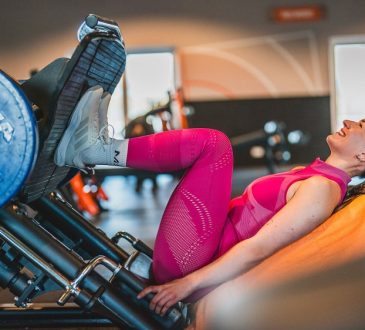
The squat pattern trains knee and hip extension, targeting the quadriceps, gluteus maximus, and adductors. This movement pattern directly replicates sitting down into and standing up from low chairs, climbing steep stairs, or rising from the floor.
-
Practical exercises: Goblet squats, bodyweight box squats, barbell back squats, and front squats.
The Hinge Pattern
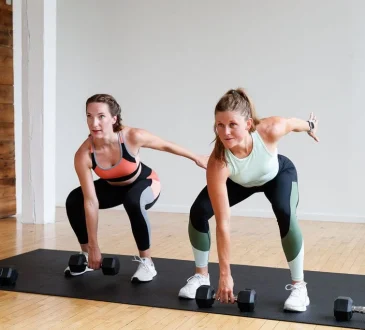
The hip hinge involves pushing the hips backward while maintaining a neutral spine, placing the load onto the posterior chain (hamstrings, glutes, and spinal erectors). This is the foundational mechanic for safely lifting heavy objects off the floor without straining the lumbar back.
-
Practical exercises: Romanian deadlifts, kettlebell swings, conventional deadlifts, and back extensions.
The Push Pattern
Pushing movements develop the chest, anterior deltoids, and triceps across both horizontal and vertical planes. They build the upper-body strength required to push open heavy doors, move furniture, or place items on high shelves.
-
Practical exercises: Push-ups, dumbbell bench presses, overhead dumbbell shoulder presses, and parallel bar dips.
The Pull Pattern
Pulling movements strengthen the latissimus dorsi, rhomboids, rear deltoids, and biceps. These exercises build postural endurance, counteracting the slouched shoulders caused by long hours of desk work and driving.
-
Practical exercises: Inverted rows, single-arm dumbbell rows, lat pulldowns, and pull-ups.
The Loaded Carry
Loaded carries involve walking while holding weights in various configurations. Carries build remarkable grip strength, shoulder stability, and deep core stiffness. They replicate the real-world challenge of hauling heavy bags, tools, or luggage over distances.
-
Practical exercises: Farmer walks (carrying weights at your sides), suitcase carries (carrying weight on only one side to challenge lateral core stability), and goblet carries (holding weight against the chest).
Designing a Sustainable Routine for Busy Lives
Achieving everyday strength does not require spending hours in the gym six days a week. For most non-athlete adults, an efficient, progressive routine performed two to three times per week provides the full spectrum of physical and metabolic benefits.
A practical, full-body weekly structure might include:
-
Frequency: Two to three non-consecutive days per week (e.g., Monday, Wednesday, Friday).
-
Duration: Thirty-five to forty-five minutes per session.
-
Exercise Selection: Four to five compound exercises per workout covering each primary movement pattern.
-
Set and Repetition Ranges: Three sets of eight to twelve controlled repetitions per exercise, resting sixty to ninety seconds between sets.
-
Progression: When you can complete twelve clean repetitions with good form, slightly increase the resistance on your next session.
Consistency and proper movement mechanics are far more critical than lifting maximum loads. Focusing on full ranges of motion, controlled tempos, and deliberate muscle contractions builds deep tissue integrity that lasts a lifetime.
Frequently Asked Questions
Can resistance training cause high blood pressure or damage cardiovascular vessels?
During a heavy lift, blood pressure spikes temporarily due to muscular contraction and intra-abdominal bracing. However, chronic adaptations from regular resistance training actually lower resting systolic and diastolic blood pressure over time. By improving arterial elasticity, reducing systemic inflammation, and supporting healthy body composition, resistance training serves as a potent cardiovascular protectant when performed with steady, rhythmic breathing rather than continuous breath-holding.
Is bodyweight training alone sufficient to build everyday strength, or are weights necessary?
Calisthenics and bodyweight movements, such as push-ups, pull-ups, bodyweight squats, lunges, and planks, can build substantial functional strength and body control. However, bodyweight training eventually presents limitations for loading certain movement patterns, particularly the hip hinge and upper-body pulling. Introducing external loads like dumbbells, kettlebells, or resistance bands allows for precise, progressive overload that ensures ongoing strength and bone density improvements over years of training.
How does resistance training reduce the incidence of chronic lower back pain?
A large percentage of non-specific lower back pain is caused by weak gluteal muscles, deconditioned spinal erectors, and poor hip-hinge mechanics. When the hips and glutes cannot generate enough force to lift or bend, the lumbar spine compensates by flexing under load. Resistance training strengthens the glutes, hamstrings, and the deep core musculature (the transversus abdominis and multifidus), creating a natural muscular belt that stabilizes the spine and redistributes physical loads safely across the pelvis.
Will lifting weights cause people, especially women or older adults, to become excessively bulky?
Building extreme muscle mass requires years of dedicated heavy lifting, specific genetic predispositions, and a substantial caloric surplus paired with high testosterone levels. Typical resistance training performed two to three times weekly produces dense, lean muscle tissue, improves metabolic efficiency, and firms the body rather than creating a bulky appearance. For women and older adults, it creates a toned, capable, and resilient frame.
What should someone do if they experience joint discomfort during a specific exercise?
Joint pain during an exercise usually signals poor movement mechanics, improper load selection, or an exercise variation that does not suit individual bone anatomy. First, reduce the weight and review movement form. If discomfort persists, modify the exercise to a joint-friendly alternative. For instance, swap a barbell back squat for a goblet squat to a box, or replace a flat barbell bench press with neutral-grip dumbbell presses or push-ups. Strength training should challenge muscles without irritating joints.
How does grip strength developed in the gym predict overall health and longevity?
Clinical research consistently shows that grip strength is a reliable biomarker for total-body muscular vitality, biological age, and all-cause mortality risk. A weak grip reflects general muscle weakness, frailty, and neurological deconditioning. Developing strong hands and forearms through exercises like deadlifts, rows, and loaded carries ensures you can maintain independent daily function, hold handrails securely to prevent falls, and perform fine motor tasks well into old age.
Can older adults with no prior lifting experience safely start resistance training?
Yes. Numerous clinical studies have demonstrated that adults in their seventies, eighties, and nineties can safely engage in resistance training and achieve substantial gains in muscle mass, bone density, and functional balance. Beginners should start under the guidance of a qualified coach, using bodyweight exercises, machines, or light resistance bands to master movement patterns before progressively introducing heavier loads.