Robotic Type-1 Modified Hysterectomy for Endometrial Carcinoma: An Emerging Surgical Protocol

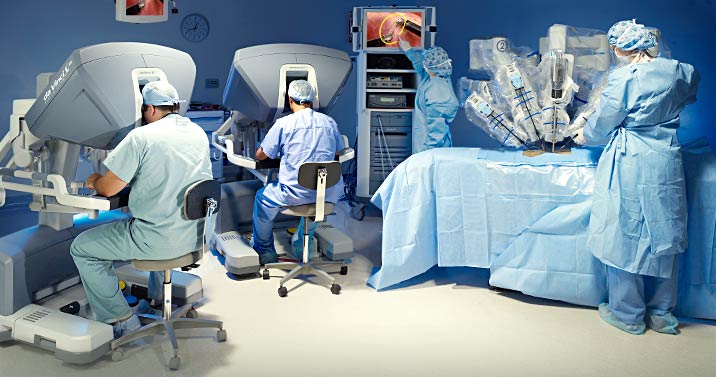
Endometrial cancer surgery has changed materially over the last decade. The historical standard, total abdominal hysterectomy with bilateral salpingo-oophorectomy and pelvic lymphadenectomy, has progressively given way to minimally invasive approaches, with robotic and laparoscopic techniques now the dominant operative approach in most international tertiary centres.
For Indian sub-speciality practice, two questions remain in active discussion: which subset of endometrial cancers benefit from a modified hysterectomy approach (rather than a standard extrafascial hysterectomy), and how to standardise the robotic technique to produce reproducible outcomes across centres.
This piece reviews the protocol-level considerations for robotic Type-1 modified hysterectomy in endometrial cancer, drawing on the published Indian institutional experience.
The classification context
The Piver-Rutledge classification of hysterectomy procedures (1974) and its modern adaptations distinguish degrees of surgical radicality based on the extent of paracervical tissue resection:
- Type 1 (extrafascial), removal of the uterus and cervix, with minimal paracervical tissue removal. Standard for benign indications and low-risk endometrial cancer.
- Type 2 (modified radical), removal of the medial half of the cardinal and uterosacral ligaments. Historically used for some intermediate-risk cases.
- Type 3 (radical), full removal of the parametrium and upper vagina. Standard for cervical cancer.
- Type 4 / Type 5, increasingly radical extensions, rarely used today.
For endometrial cancer specifically, the surgical question is whether a standard Type 1 hysterectomy is adequate, or whether a Type 1 modified approach, incorporating elements of paracervical tissue handling between Type 1 and Type 2, produces better margins and lymphatic clearance for selected intermediate-risk cases.
Where Type-1 modified fits in endometrial cancer
The case for a Type-1 modified approach rather than a strict Type-1 extrafascial hysterectomy rests on a few clinical considerations:
- Subclinical cervical involvement. Endometrial cancers that approach or invade the cervix have a higher risk of paracervical lymphatic spread that a strict extrafascial hysterectomy may not adequately address.
- Histological subtypes with higher local recurrence risk. Serous, clear cell, and high-grade endometrioid cancers have higher local recurrence rates that may benefit from slightly more radical resection.
- Imaging-suggested deep myometrial invasion. Pre-operative MRI showing deep myometrial invasion may identify cases where slightly more radical surgery is appropriate.
- Cases where intra-operative findings suggest more extensive disease than pre-operative imaging predicted.
In these scenarios, the surgical decision to perform a Type-1 modified hysterectomy, rather than reflexively defaulting to either strict extrafascial or full radical, is judgement-based. The protocol for performing this consistently across an operating team is what the institutional experience addresses.
The robotic platform’s specific advantages
For Type-1 modified hysterectomy specifically, the robotic platform offers several advantages over open and conventional laparoscopic approaches:
- Visualisation in the paracervical space. The 3D magnified visualisation allows precise identification of the ureters, uterine vessels, and paracervical lymphatic channels, anatomy that’s substantially harder to navigate in open surgery.
- Wristed instrumentation. Type-1 modified dissection requires precise tissue handling at the lateral parametrium. The wristed instruments allow this dissection more reliably than rigid laparoscopic instruments.
- Sentinel lymph node mapping integration. Robotic platforms with integrated near-infrared imaging support ICG-guided sentinel lymph node biopsy as part of the same procedure, which is increasingly the preferred approach to lymph node assessment in endometrial cancer rather than full systematic lymphadenectomy.
- Reduced operative morbidity. Smaller incisions, less blood loss, shorter hospital stay, faster return to baseline. In endometrial cancer where many patients have comorbidity (obesity, diabetes), the recovery profile of the minimally invasive approach is materially advantageous.
The protocol, key elements
A standardised robotic Type-1 modified hysterectomy protocol for endometrial cancer involves several specific elements that distinguish it from a standard extrafascial hysterectomy:
Pre-operative planning: – Pre-operative MRI to assess myometrial invasion depth, cervical involvement, and lymph node status – Endometrial biopsy histology to determine grade and subtype – Multidisciplinary tumour board review for cases with intermediate-to-high risk features
Patient positioning and port placement: – Lithotomy position with appropriate Trendelenburg – Five-port robotic configuration with appropriate spacing for paracervical access – Pre-operative cervical ICG injection if sentinel lymph node mapping is planned
Sentinel lymph node mapping (preceding hysterectomy): – Bilateral pelvic exploration for fluorescent lymph nodes – Selective sentinel node excision for ultrastaging – Conversion to full systematic lymphadenectomy if sentinel nodes are positive on frozen section
Modified hysterectomy technique: – Identification and lateralisation of the ureters with adequate distance – Coagulation and division of the uterine artery at its origin from the internal iliac – Modified handling of the cardinal ligaments, partial division to allow more thorough lymphatic clearance without committing to full Type 3 radicality – Vaginal cuff with adequate margin (1–1.5 cm)
Specimen retrieval: – Intact specimen retrieval through the vagina with appropriate containment to prevent spillage of any potential surface disease – No power morcellation under any circumstance
Closure and post-operative care: – Standard robotic closure with ERAS protocol implementation – Early mobilisation, early feeding, structured discharge planning
The published Indian institutional experience documenting this approach is available in the enhanced surgical protocol for robotic Type-1 modified hysterectomy in endometrial carcinoma cases, which details the specific technique modifications and the institutional outcome data.
Outcomes signals from the early Indian experience
The Indian institutional series exploring this approach has documented several observations:
- Operative time for robotic Type-1 modified hysterectomy with sentinel lymph node mapping falls in the 180–240 minute range for experienced operators, comparable to robotic standard hysterectomy with full pelvic lymphadenectomy but with reduced lymphatic morbidity
- Blood loss is consistently in the 50–150 ml range, materially lower than open approaches
- Hospital stay is typically 2–4 days, again materially shorter than open
- Complications at the standard endpoints (urinary, bowel, vascular, lymphatic) are within international benchmarks
- Oncological outcomes at the 2–3 year mark are encouraging, with surgical margins consistently negative and recurrence rates within expected ranges for the histological and stage-based prognosis
These are observational findings rather than randomised trial results, but the protocol-level reproducibility across the operating team has been a notable feature.
The trainee perspective
For sub-speciality fellows learning this protocol, three observations from the institutional experience:
- The learning curve is steep but finite. Most fellows reach competence on this specific procedure within 15–25 cases of focused practice.
- Sentinel lymph node mapping is the technical skill that takes longest. ICG injection technique, fluorescent node identification, and the judgement on when to convert to full lymphadenectomy each require dedicated practice.
- The paracervical dissection is the differentiator from a standard extrafascial hysterectomy. Understanding the surgical anatomy in this space, the relationship between the uterine artery, ureter, and parametrial lymphatics, is what produces consistent margins and lymphatic clearance.
What the protocol does not solve
A few honest limitations:
- Patient selection for Type-1 modified versus strict extrafascial versus full radical remains judgement-based; the algorithms are not yet fully evidence-defined
- Long-term survival comparison with open approaches is being collected but is still maturing
- Cost considerations relative to open surgery remain real, particularly in resource-constrained settings
- The protocol assumes access to a robotic platform with NIR imaging, which is not universally available
The bottom line
Robotic Type-1 modified hysterectomy for endometrial cancer represents one of the practical refinements in sub-speciality gynaec oncology surgery of the last several years. The protocol-level standardisation matters because it allows the technique to be reproducible across an operating team rather than dependent on an individual surgeon’s intuition.
For sub-speciality centres performing endometrial cancer surgery, building institutional protocol around this approach, with appropriate patient selection, sentinel lymph node mapping, and ERAS implementation, is increasingly the right default for intermediate-risk cases.
About the author
This piece was authored by Dr. Nishtha Tripathi Patel (MBBS, DGO, DNB, Fellowship in Gynaecological Oncology, ESGO-certified), an ESGO-certified gynaecological oncosurgeon in Ahmedabad with published academic work on the robotic Type-1 modified hysterectomy protocol for endometrial carcinoma. Reach the practice at +91 76988 00333.